
If you work in mental healthcare, you’ve probably had this conversation at least a dozen times in the last year: what does AI actually mean for therapy? It’s a question that comes loaded with hope, skepticism, and more than a little anxiety.
We spoke with three Two Chairs clinicians Kate Grammy, Lara Benefield, and Maggie Brewer to talk honestly about where AI fits into the therapy room, where it doesn’t, and what it’s actually like to use these tools in daily practice as a mental health therapist. Their answers ranged from cautiously optimistic to bluntly skeptical, but they landed on a shared bottom line: AI can support the work of therapy. It can’t do the work of therapy.
Here’s what they had to say.
Can AI replace therapists?
We asked each clinician this question first, before anything else and the answers came fast.
Kate Grammy: “I don’t [think it can]. I think AI can be really helpful for therapists, and I think it helps look at a lot of information and surface pieces of information to me in a way that is more efficient and more focused than I would be able to do without it. But I firmly believe that there’s something uniquely healing in the human connection and the relationship between two people. I don’t think AI will ever be able to capture that connection that we feel in the room, in that shared space.”
Maggie Brewer didn’t hesitate either: “No. Absolutely not.”
Lara Benefield came at it from her own experience using AI Documentation tools in session prep and documentation: “They can’t connect the dots. AI thinks that oh, client presented this way it’s like a brand new client every time because it doesn’t remember that we had a previous session. It remembers everything that happened in this session, but it doesn’t remember the last one. But I do. So yeah AI cannot replace me.”
Three clinicians. One consistent answer: no. No matter how advanced AI in mental health gets, what a therapist offers in the room can’t be automated.
Where AI actually helps
Once the “can it replace us” question was out of the way, the conversation shifted to something more interesting: where AI for therapists is genuinely making a difference behind the scenes.
Kate Grammy sees it as a research and pattern-recognition tool: “Therapists track a lot of information, and we’re constantly trying to understand people better. Where AI can really help me is in surfacing information or identifying a trend in what someone’s shared with me more efficiently than I would be able to do myself. That’s what lets me be a better therapist in the room, because I have all the right information in front of me.”
Maggie Brewer, who specializes in Internal Family Systems, pointed to accessibility: “I think it gives more people more resources and makes things more accessible to everybody. If you want to learn about CBT, you can look up the different pieces of it it makes it easier for people to actually see and understand.”
Lara Benefield says she was initially skeptical of AI note-taking tools altogether. What changed her mind was seeing one in someone else’s work. A client was rematched to her, and the first-session note in their chart written with AI assistance was more thorough than her own typical notes.
“What I’ve discovered is that AI and I complement each other. AI has a better memory, but I have better analytical and reflective skills connecting all the dots.” Lara still does collaborative documentation with her clients at the end of each session, where the real clinical connections get made. The AI-assisted notes, she said, “provides the backup for all the connections [through examples]. If I provided all those examples myself, it would take me ten times as long.”
How Two Chairs clinicians are using AI today
This isn’t a hypothetical conversation for our clinicians AI is already part of how many of them work, in carefully scoped, opt-in ways designed to support (not replace) clinical judgment.
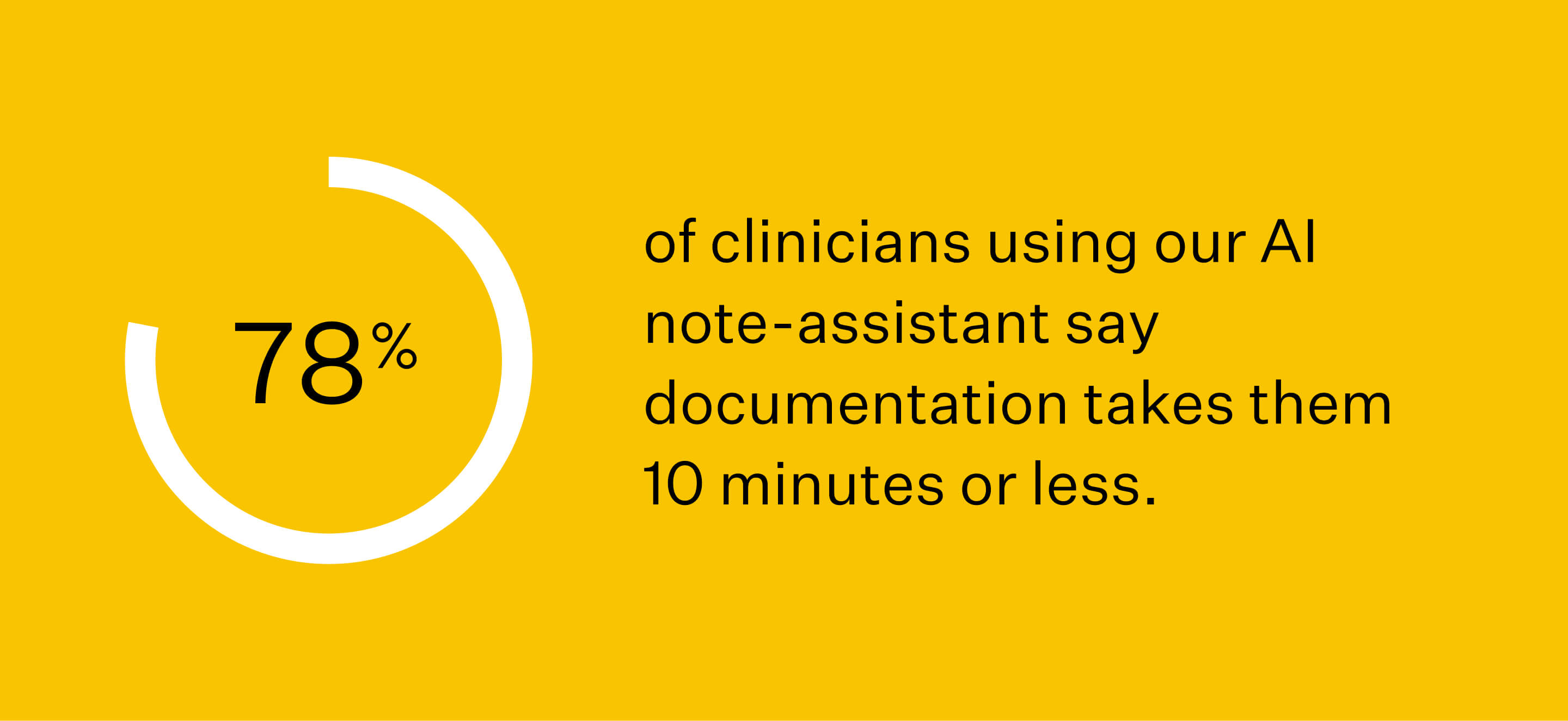
- Upheal, an optional AI note-assistant With client consent, therapists can use Upheal to help draft HIPAA-compliant post-session notes. Beyond notes, clinicians can also ask it to summarize a case, help prepare for an upcoming session, or flag anything they might be missing or want to consider.
- Google’s Gemini All therapists can access Gemini to support admin tasks, such as drafting emails, finding answers from their drive, and crafting goals for treatment plans. Because clinicians work with PHI, Gemini for clinical use is strictly non-PHI: no client details are included.
“For me, Upheal has been a game changer. It has allowed me to focus on the sessions more readily and not feel like I am missing key things mentioned that may not be the focus of sessions. It has increased my productivity overall, getting notes done very quickly.”
— Two Chairs clinician
The bottom line
Ask a Two Chairs mental health therapist whether AI can replace them, and you’ll get a fast, confident “no.” Ask them where AI is actually useful, and you’ll get a thoughtful answer about documentation, information-surfacing, and accessibility. That combination openness to the tools, clarity about their limits is what credible, forward-thinking mental healthcare looks like right now.
AI isn’t going to sit across from a client and hold space for their grief, their growth, or their breakthroughs. But it might just help their therapist show up to that moment a little more prepared, a little more efficient, and a little more present. As Lara put it, simply: “AI cannot replace me.” Her colleagues would agree.


